


What is the Vestibular System?
The vestibular system is located in the inner ear. It’s like the body’s internal GPS, constantly detecting motion, head position, and gravity. This sensory input is essential for body awareness.
The system works in partnership with your eyes and muscles to ensure your world remains stable and clear, even while you’re moving.
🩵 Check out our related article on balance and the vestibular system.
Benefits of Vestibular Movement
By doing the types of activities shared here, we can help children:
✓ Orientate themselves in space.
✓ Remain balanced.
✓ Feel safe while moving.
✓ Coordinate both sides of the body and also eye and head movements.
While vestibular input is very important for a child’s development, it needs to be well matched to a child’s abilities. If you notice anything unusual, chat to your child’s Teacher or ask an Occupational Therapist for advice.
Rocking Activities
A child rocking themselves is a sure sign that they need vestibular input. You can be proactive and encourage some rocking in advance.
- Rock in a rocking chair or on a rocking horse
- Rock back and forth on a gym ball. Have your child try this lying on their stomach and on their back. Support them as needed.

Row Row Row Your Boat Games
These activities emphasize core strength and calming vestibular input.
Forwards and Backwards Row:
- Sit facing one another, crisscross your legs, or sit cross-legged.
- Reach across and hold hands.
- Alternately push and pull so your upper bodies rock forward and backward, as if you are rowing a boat.
Side to Side Row (In-Lap):
- Sit with your child in your lap.
- Begin to row, moving from side to side, as if pulling one oar and then the other.
Standing Row:
- Stand facing your child, about a foot apart, and hold hands.
- Slowly extend your arms while your child keeps their body straight and leans back.
- Gently pull your child back toward you and repeat the motion.
Please GO SLOW!
It’s easy to overstimulate a child with vestibular activities. Experiment with going slow or just a little faster. Let your child be the Captain, directing the moves.
🩵 See these YouTube Videos for some Row Row Row your Boat games.
Swinging and Pulling
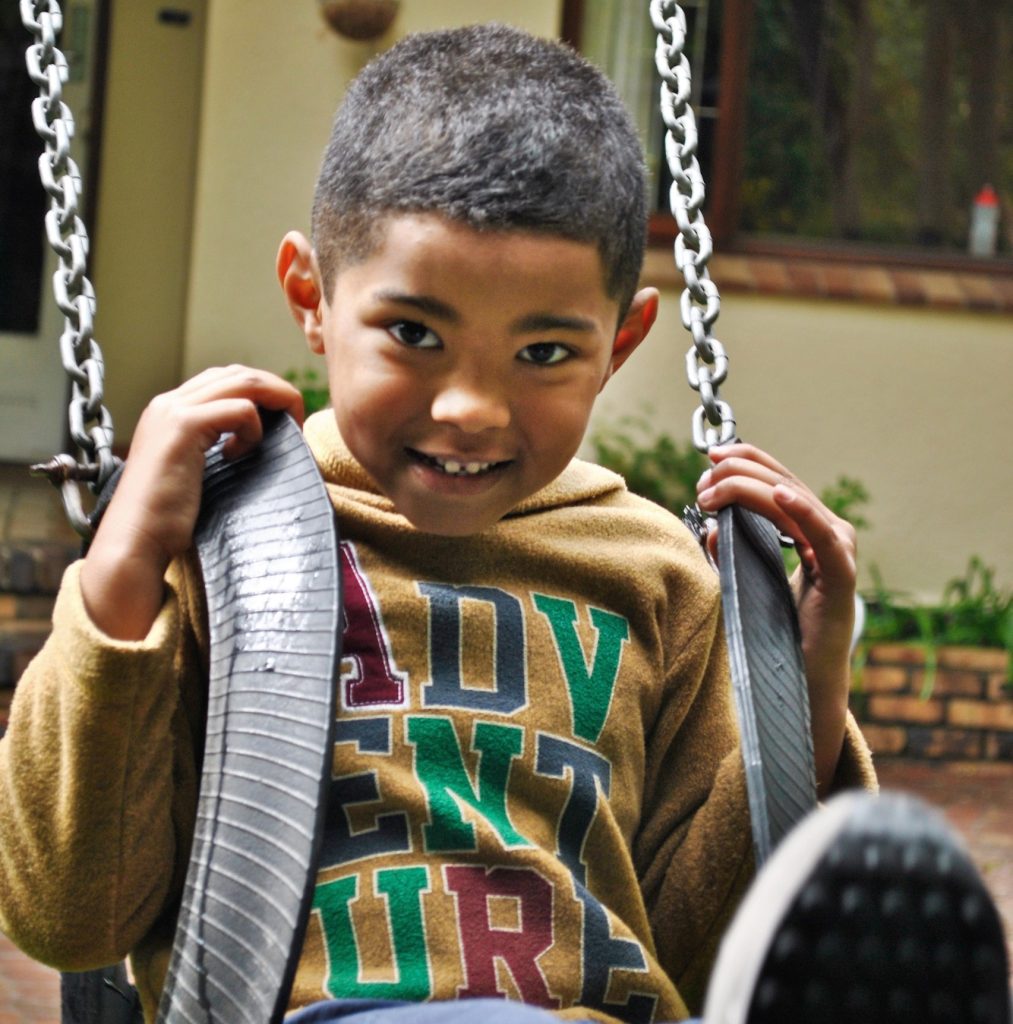
- Swing on a swing set or a home-made swing.
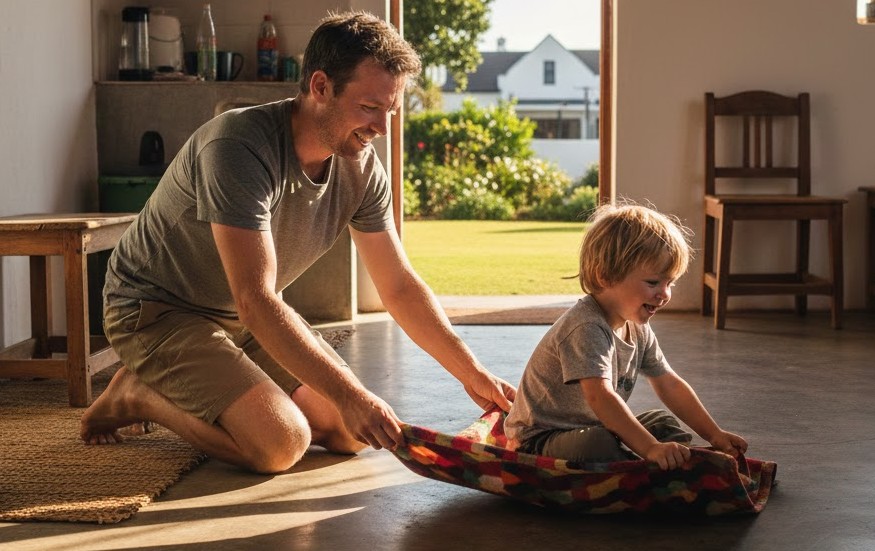
- Blanket Swing: use a thick, strong blanket and gently swing your child from side to side.
- Soft Hammock Swing: If your child enjoys swinging, consider a soft hammock swing like the one shown in the banner photo above (available from the Takealot online store). They’re perfect for gentle twirling.
- Blanket Pull: if you don’t have a helper for the blanket swing, try the blanket pull — add some zig-zagging as you move
Spinning and Rotational Movement
Most children benefit greatly from spinning activities.
- Spin on the Spot: encourage your child to spin on the spot for a maximum of 10 seconds one way, and then 10 seconds the other. Then move on to another activity.
- Swung in Circles: most children love to be swung in circles by a strong adult. As with all these activities, start slow and listen to your child if they want less or more.
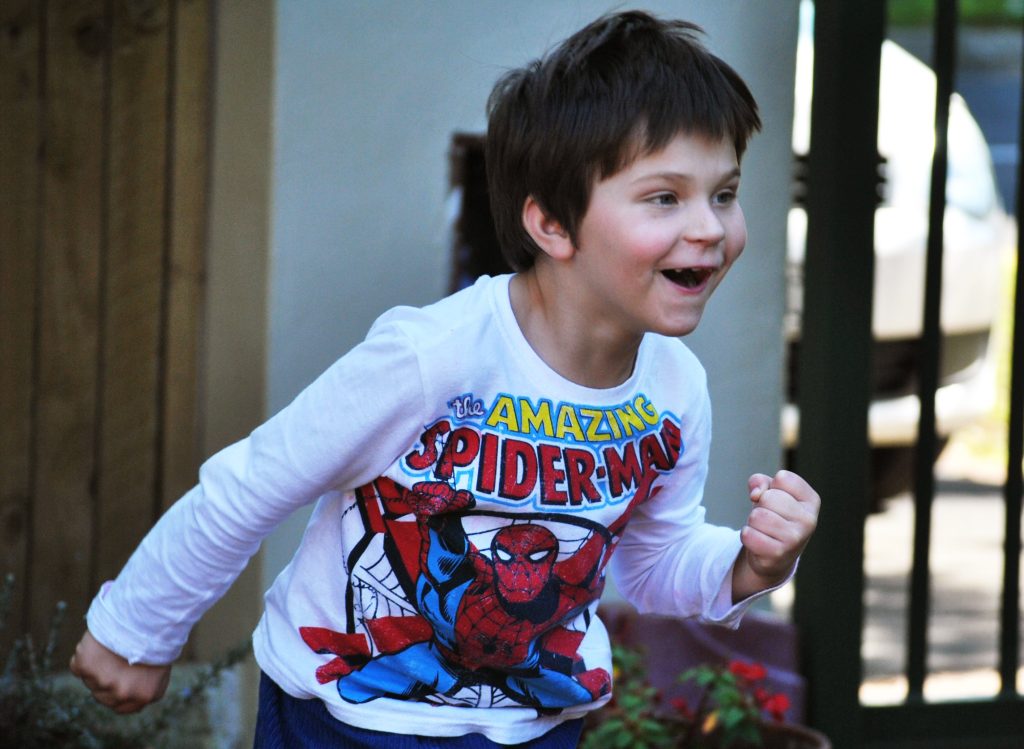
- Superhero Play: let your child put on a cape and jump and swoop into action as a Superhero. You can secure colorful fabric bows to your child’s wrists to emphasize the movement.
Recognizing the Need for Input
Seeking vestibular input isn’t necessarily a bad thing. However, if your child constantly (even obsessively) looks for ways to get input, it may be time to set up a routine.
Signs to look for:
- Climbs dangerously high — can’t seem to get high enough.
- Seeks out rocking, swinging, and swaying.
- Spins frequently (while standing, on swings, in swivel chairs, etc.).
- Doesn’t seem to get dizzy.
Gentle repetitive vestibular input is calming and helps organize the nervous system.
How Often and How Long?
Vestibular input lasts! 15 minutes of vestibular input can last for up to 12 hours. Try giving some kind of input two to three times a day, spread out over the day (e.g., morning, afternoon, evening).
Be sure not to overdo it. If your child resists an activity, or becomes rigid or unusually restless or irritable, stop the exercise.
Want more detail on the system?
- This video reviews the Vestibular System (2.5 minutes)
- This paper gives academic, expert perspectives on Vestibular Activity and Cognitive Development in children.
At Mindstretch our holistic approach for good learning prioritizes movement every day.